Inside The Strange & Evolving Role Of ECHL Broadcasters During A Pandemic
Inside The Strange & Evolving Role Of ECHL Broadcasters During A Pandemic
Inside the life of an ECHL broadcaster whose team shut down for the season.
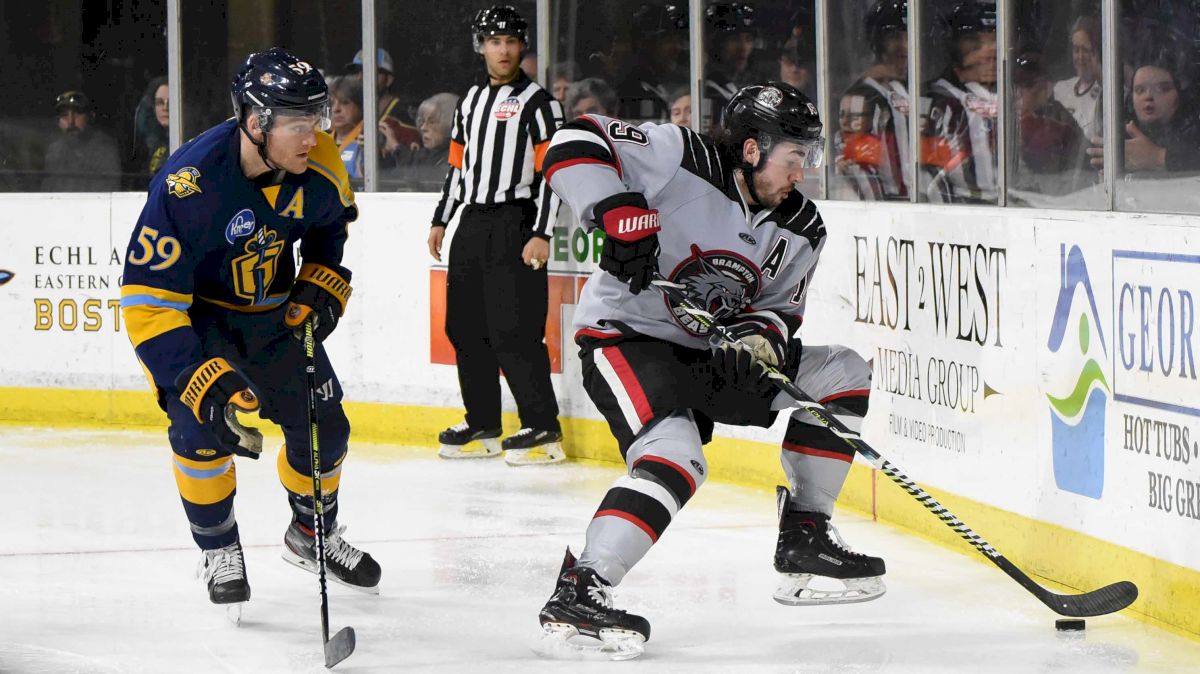
Chris Ballard can’t say what he misses most during this long winter without hockey. The answer is everything.
The pregame chats with other ECHL broadcasters. The camaraderie with the players on his team. Even, believe it or not, wearing a suit.
There hasn’t been an adrenaline-pumping goal call for 10 months and there won’t be another for 10 more.
“I miss saying, ‘he shoots, he scores,’” Ballard wrote on Twitter in November.
These are challenging times for all members of the minor league landscape. That includes the people who describe the games.
“A lot of guys in my position are creatures of habit,” Ballard said. “For me personally, I got into hockey to avoid normalcy in my life and get away from a 9-to-5 situation. It has definitely been a pivot these last few months.”
Ballard is the voice of the Newfoundland Growlers, who have packed a lot of success into their brief history. They won the Kelly Cup during their inaugural season in 2018-19. They set the league record for consecutive home wins in Year 2.
That second season ended early because COVID-19 canceled the playoffs. The third season was put on hold when the Growlers opted out.
Ballard has stayed busy during his downtime. He produced 12 episodes of a Growlers show that aired on local TV. He helped put together a book commemorating the team’s championship.
More than anything, he’s thankful to have a job. Several broadcasters were furloughed or laid off when their teams chose not to play this season.
What COVID-19 means for the future of minor league broadcasting is an open question. Will teams continue to offer play-by-play of their games? Will those voices travel with the club or describe the action from home like many are doing now?
“I’m not opposed to the position evolving,” Ballard said. “I know a lot of guys around the league have done a great job pushing forth top-quality broadcasts remotely. While that will never replace the in-arena experience of calling a game, I like to embrace that kind of change.”
Ballard has some experience in that area. He called games from the dining room table of his in-laws’ house when he was with Brampton. That was before a pandemic made it commonplace.
Some front offices are being downsized and there’s no way to know how many jobs will return. Ballard believes broadcasters can become more important than ever when games are again played in the cities that lost them.
Fans might be reluctant to flock to arenas at first. They’ll need a way to connect to the action.
“This is a time for guys in my position to embrace what we have in front of us,” Ballard said. “Hopefully use that as an opportunity to talk to ownerships and say, ‘You’re going to have more people with eyes and ears on us.’ That could turn into more revenue for the team. It could turn into more eyes on your brand. The whole thing could grow.”
Until October rolls around, Ballard will find ways to stay busy and endure the 9-to-5 life he tried so hard to avoid.
This ECHL season, with so many teams not participating, will pass. It will hopefully be an aberration.
“Don’t get me wrong,” Ballard said. “I’m happy to not be stuck in an airport or a 10-hour bus ride. But it certainly makes that grass look a little bit greener. You’re looking at it and you’re like, ‘Man, I’d kill to be in the middle of nowhere freezing my butt off.’”
Those days will return. The good and bad.
Games will eventually come back to Mile One Centre. Someone will shoot. Someone will score. Ballard will tell everyone about it.
Jason Guarente has covered the Reading Royals and ECHL for 10 seasons. He can be found on Twitter @JasonGuarente.