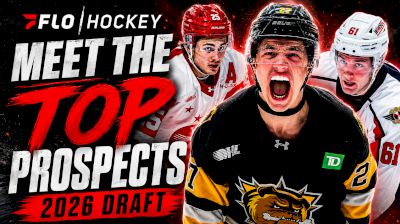
There has never been a draft quite like the 2026 NHL Draft to my memory. Not as long as I've been doing dedicated draft coverage for the last 13 years. That creates excitement, some drama and a whole lot of unpredictability. Starting at the very top of this draft, the lack of certainty and the level of risk associated with each prospect creates heartburn for scouts and fans alike, but it does make things a little more interesting.
- To watch elite junior, college and professional hockey all season long, subscribe to FloHockey today
- FloHockey's 2026 NHL Draft Collection
- Called Up: The Prospects Podcast
Building out the top 10 for this year's class took more time, thought and research than any in years past for me. Here's the worst part: I'm no more confident today than I was in any of the previous months or weeks. This is an imperfect top of the draft, but one that has the chance to create tremendous value still.
I have said since about January, maybe sooner, that I did not feel this draft had a true No. 1. That isn't to say there aren't good players. The top tier of this class is very strong. But the fact that two sub 6-foot wingers are at the top puts non-premium positions in the slot to go No. 1. No teams build through the wing.
It's important to keep in mind that a draft ranking is not the same as a mock draft. This isn't suggesting who should be picked for the Toronto Maple Leafs, nor is it a guess at that. This is simply my evaluation of players based on who I think will be the best and most impactful NHL players. And ordered as such.
So let's get to it.
FloHockey's 2026 NHL Draft Rankings Final Top 75
1. Gavin McKenna, LW, Penn State
The most skilled player in the draft, McKenna has the offensive advantage over just about every player in the class. But the concerns about his play away from the puck, lack of interior play and reliance on power play usage for production this season caused at least pause. McKenna had a good season, but not a season that was reflective of a no-doubt first-overall selection. No one really took the mantle away from him. Since I feel that McKenna has the potential to be the most productive player in this draft class, I’ve left him at No. 1, but I can say that this is the least certain I’ve been about ranking a player No. 1 in my career. There are potentially more risks with McKenna than others I have tracked in previous years for the No. 1 pick.
That said, he has the chance to be a special producer at the next level. His production in college was in line of previous players that ascended to starring roles in the NHL. I don't think many doubt his ability to make an impact. The question will be if he is enough of a difference maker to be the kind of franchise cornerstone you expect a No. 1 pick to be, and I'm less certain of that. With the chance he becomes a 100-point winger still feeling realistic, he stays at No. 1.
Projection: Top Line Scoring Wing / Top 20 scorer
NHL Comparable: Artemi Panarin
✨Gavin McKenna✨
— FloHockey (@FloHockey) December 27, 2024
He's got Canada up 1-0 through 20 👀#WorldJuniorspic.twitter.com/plkKWLmqEE
2. Ivar Stenberg, LW, Frölunda
Stenberg had a historic kind of run this year playing in the SHL and later at the World Junior and Men’s World Championships. He won gold at the former, leading the team in scoring, and had the third most productive season by a draft-eligible in the SHL, trailing only the Sedin twins. By all accounts, Stenberg is a high-end winger with a competitive edge and the ability to score. He is quick, has a good motor on him and is excellent in puck pursuit. No player who has scored as much as Stenberg did at the Men’s Worlds has fallen below the No. 2 pick. The only real downside is that he doesn’t have the size teams covet and isn’t as dynamic as McKenna, but he is a bit more complete in terms of the ways he can impact the game.
Projection: Top Line Scoring Wing
NHL Comparable: Lucas Raymond
3. Chase Reid, D, Soo Greyhounds
Reid checks so many boxes and I had a long consideration for him as the No. 1 player on this list. Instead, he’s the No. 1 defenseman in a loaded class and the player I think most helps an NHL team a few years down the line. Reid has the size, athleticism and skating ability to be a real difference maker. His hockey sense has come along, while his defending continues to improve. He’s going to need a year or two more before he can step into an NHL lineup, but his skill level and growing hockey sense lead me to believe he’s got the potential to become a reliable top-pairing defenseman and power-play leader. Reid's slotting is much more based on projection than hard evidence, but the combination of skill, skating and size makes him difficult to pass up.
Projection: Top-Pairing Defenseman / No. 1 power play
NHL Comparable: Zach Werenski
4. Caleb Malhotra, C, Brantford Bulldogs
Hockey sense, character, compete, skill. The list goes on and on. While Malhotra is not going to get you out of your seat with the plays he makes, he’s involved in so many things on the ice, you won’t care. Malhotra projects as a No. 2 center with a chance at being a No. 1 as he develops. His NHL bloodlines showed the apple didn’t fall far from the tree as Caleb Malhotra is a committed all-around player as dad Manny was. He also has good size, moves well and clearly has some high-end hockey sense. His performance during the OHL playoffs was exemplary, which only enhanced his growing stock.
Projection: Top Six Center / All Situations Player
NHL Comparable: Bo Horvat
5. Carson Carels, D, Prince George Cougars
Perhaps the most complete defenseman of this class, Carels does a little bit of everything topped off with high-end skating and mobility. While he may not have the most skill of the available defensemen, he still produced 20 goals and 73 points in 58 games in the WHL this year. On top of that, he plays a physical brand of defense that makes him difficult to play against. Carels has a high level of hockey sense on top of it all. He is committed to go to North Dakota next season, which has been a factory of NHL defenseman for decades, which should provide a good finishing school for him. One thing to note, however, is Carels was unable to test at the NHL Scouting Combine due to a lingering upper-body injury that teams are keeping note of. It does not sound like that will have a significant impact on where he goes.
Projection: Top Four Defenseman
NHL Comparable: Charlie McAvoy
6. Keaton Verhoeff, D, North Dakota
Among the defensemen in this class, Verhoeff may have the highest overall ceiling. As a 6-foot-4, 212-pound defenseman with good mobility and a strong athletic toolkit, there’s a lot to like. The questions surrounding Verhoeff, especially with his playing in the NCAA as a young 17-year-old, mostly centered around his hockey sense and ability to play with poise. There’s a reasonable argument that he played around what was expected of a player his age in one of the toughest NCAA conferences. Having seen the complete body of work, I believe Verhoeff has more offense than he showed this year and that he’ll be a more effective player next season given the steep learning curve for him this year. His skating, his puck play and athletic ability are all NHL assets at this point, no worse than NHL average. The hockey sense question planted just enough seeds of doubt for me to not list him among the top five players in this draft, but I would raise no objections to a team taking him at or near the top of the defense group.
Projection: Top Four Defenseman
NHL Comparable: Aaron Ekblad
7. Viggo Björck, C, Djurgårdens IF
This is the epitome of a player who has just about everything but size. Björck is a competitor, he’s skilled, he’s incredibly intelligent and just flat out knows how to play. Despite his youth, he has been a leading player at the professional level, getting tough matchups and being handed a lot of responsibility. He was essentially the No. 1 center on Sweden’s golden World Junior team and essentially played top six for the senior national team despite being the youngest player on both squads. He’s a remarkable talent when it comes to his hockey sense and his compete is as good as anyone’s in this tournament. It is difficult for teams to take 5-foot-9 or shorter centers this early, but I think Björck checks enough boxes to be a legitimate option this early, if not sooner.
Projection: Top Six Center
NHL Comparable: Logan Stankoven
Anton Frondell (#Blackhawks) ➡️ Viggo Björck (#NHLDraft) ➡️ 🚨@DIFHockeyse | @NHLBlackhawks #SHL pic.twitter.com/z0FOMfYvXY
— FloHockey (@FloHockey) March 17, 2026
8. Alberts Šmits, D, Jukurit/Munich
Šmits is a difficult prospect to define in that his offense is not exceptional and in some cases underwhelms. His defense is solid and he is growing in confidence in that element. He seems to be on a fairly rapid trajectory to the top level thanks to his strong understanding of the game, his competitive drive and his strong skating ability. He looks physically as ready as any prospect to jump into an NHL lineup. My sense is that the best path forward for him is AHL next season and be in the NHL on a full-time basis as soon as 2027-28. Šmits played a ton of high-level hockey with a full season of pro, the World Juniors, Olympics and World Championship. In the latter two events, he more than held his own and often was relied upon in a variety of situations. There’s a chance he rounds out into a high-minutes player on an NHL roster, though I think we need to see a little more offense for that to become a reality.
Projection: Top Four Defenseman
NHL Comparable: Ryan McDonagh
NHL Draft prospect Alberts Šmits is just doing what he has to when it comes to media 😅#WorldJuniors #IIHF #TeamLatvia #NHLDraft pic.twitter.com/KMM9KnuJmw
— FloHockey (@FloHockey) December 31, 2025
9. Daxon Rudolph, D, Prince Albert Raiders
Rudolph had an incredible season, leading Prince Albert with 78 points in 68 games. He had 27 more points in 19 playoff games as the Raiders fell just short of the WHL title. While the offensive elements of his game are more pronounced than his defending, Rudolph is a two-way player that has the size and mobility to fit into a prominent role in any lineup. His ability to see the ice and dictate shifts at the junior level is something that suggests he’ll have a chance to be a high-level producer at the next level when the game doesn’t come as easy. If there’s a knock on Rudolph, it’s that he could be a bit more intense on the ice and add a bit more of a mean streak to his game to be a little tougher to play against when he doesn’t have the puck. There’s a smoothness and quality to his game, however, that suggests he has a chance to be a legitimate top-four performer at the next level.
Projection: Top Four Defenseman / Top Power Play
NHL Comparable: Shea Theodore
10. Wyatt Cullen, LW, U.S. National Under-18 Team
One of the fastest-rising prospects in this draft, Cullen is among the most fascinating prospects this year. He has been on a rapid physical growth trajectory, growing about half a foot since entering the NTDP. What I like most is that he was super skilled as a smaller player and hasn’t lost that as he grew into a 6-foot-1 winger who may not be done growing. In a draft that lacks high-end skill at a lot of positions, Cullen may have one of the best projectable profiles in terms of pure point production this side of McKenna and Stenberg. The thing about Cullen is that there’s a ton of projecting to do with him, which means there’s also a lot of risk. His numbers weren’t eye-popping this year, but the totality of evidence including the lack of team strength at the NTDP this year, Cullen is still projected as a top-six level producer. One other interesting note, Cullen is just one week shy of being eligible for next year’s draft, making him one of the class’s youngest players.
Projection: Top Six Scoring Winger
NHL Comparable: Tim Stützle
11. Malte Gustafsson, D, HV71
Guatafsson has put himself into the tier of the best defensemen in this draft. He’s 6-foot-4, over 200 pounds and knows his way around the sheet. Gustafsson is a solid defender, who plays with some physicality and is at his best when he’s got a bit of snarl to him. His skating is smooth and allows him to cover ground efficiently. Gustafsson does not have a natural offensive touch, but he moves pucks effectively and his numbers were impacted by an HV71 lineup that didn't have a lot to it at either the pro or U20 level. Gustafsson shined brightest in playing a mountain of minutes for Sweden’s gold-medal World U18 Team and that is the lasting impression. He has all the tools NHL teams are looking for and I would not be surprised to see him go even higher than I have him here.
Projection: Top Four Defenseman
NHL Comparable: Seth Jones
12. Ethan Belchetz, LW, Windsor Spitfires
An injury shortened Belchetz’s season, but not before he put up 34 goals in 57 games. He averaged better than a point per game and improved from his rookie total by 21 points. Belchetz has so many tools and the size profile NHL teams go gaga over. Belchetz has good hand skills and can really finish with a high-end shot. He hits, he will drop the gloves and when he plays with aggression, his game actually seems to be even better. Belchetz is not an amazing skater, which puts some limitations on him. I also think sometimes he plays the game a little too predictably and needs to play with more feel and creativity to get the most out of that incredible size and skill combination he has. I think the ceiling is pretty high and if he can add a gear to his skating, he has a chance to be an impressive player.
Projection: Middle-Six Power Winger
NHL Comparable: Quinton Byfiled
13. Tynan Lawrence, C, Muskegon Lumberjacks/Boston University
It was a bit of a weird year for Lawrence. He got hurt in training camp, missed a bunch of time then came back and performed well for the Muskegon Lumberjacks. Then he went to Boston University mid-season and had seven points in 18 games. The full body of work on Lawrence has some really great things like being the MVP of the Clark Cup Playoffs in the USHL at 16 and some not so great. Lawrence is a higher-end skater who can also play with some skill that allows him to create. He has a motor that keeps running and is dogged in puck pursuit. The questions that have been raised since his move to BU is if his hockey sense is at that high of a level. He has all of the tools, but some of his reads and overall decisions as the season progressed left a little to be desired. That said, the totality of views over two seasons suggest a player that has a number of NHL-level abilities who is going to get back on track as soon as this season.
Projection: Middle-Six Center
NHL Comparable: Dylan Holloway
TYNAN LAWRENCE HAS ARRIVED 🚨@MuskegonJacks | @USHL #ChopChop #GetJACKD #MKG #USHL #NHLDraft pic.twitter.com/yHKZFaHvPf
— FloHockey (@FloHockey) October 25, 2025
14. Oscar Hemming, LW, Boston College
Hemming had a bizarre season in that he attempted to play in the OHL, but was denied the chance due to IIHF transfer rules, then had to find a Plan B. He joined Boston College for the second semester and had some good early results. Hemming is a big forward with some scoring pop and physicality. He has power winger potential and likely provides a source of some secondary scoring. Hemming was an extremely tough eval this year due to his absence in the first half and coming into a college season for a Boston College team that had its ups and downs this year. The upside, however, based on what we saw from him this season was enticing enough for teams to value him extremely highly in this draft. With the size profile and the aggressive nature with which he plays the game, teams are going to find a bet worth making,
Projection: Middle Six Winger With Scoring Pop
NHL Comparable: Will Cuylle
15. Alexander Command, C, Örebro
A 6-foot-1 two-way center with an unrelenting motor and enough skill to suggest he can provide secondary scoring, Command is an intriguing player in a weak center class. His competitiveness in all areas of the ice resonates and as he gets physically stronger, he should only become more effective as a puck hunter and a thorn in the side of his opposition. He looked excellent at the U18 Worlds and was a higher-end scorer in Sweden’s U20 ranks this season. He is expected to get more pro minutes next season. Command can absolutely fire a puck, too, which suggests he’s going to be able to find the back of the net more and more. His play off the puck, however, is the reason I think he belongs in or near the Top 15 conversation.
Projection: Middle-Six Center, Tough Matchups
NHL Comparable: Brayden Schenn
16. Oliver Suvanto, C, Tappara
Suvanto has the profile of a powerful two-way center that makes things difficult on opposing teams’ top players. He played all year in Finland’s top pro level and was a leading player for their World Junior team. He has all the physical tools you could want, but he has had a hard time scoring with any level of consistency and a lackluster World U18s didn’t calm those concerns. So why would Suvanto still be this high? Big centers with defensive acumen, physicality and high-compete play a lot and for a long time. There have been glimpses of skill and his hockey sense that suggest he can sit in the middle of a team’s lineup and make things more challenging for the opposition.
Projection: Middle-Six Center, Tough Matchups
NHL Comparable: Radek Faksa
17. Maddox Dagenais, C, Quebec Remparts
Dagenais is the kind of prospect that has all of the things you want to see. He has size, he has higher-end skill for a bigger player, a goal-scorer’s shot, and when he turns it up he can be a competitive, physical player. He has, however, lacked some consistency and details that leave a little to be desired and he has some detractors among scouts. There’s also a belief that he may not be a long-term center in his pro career due to his details off the puck not being particularly strong. I tend to lean more on the positive with this player, though. While there may only be flashes of his higher-compete game, the skill he possesses is much harder to come by in a player of his size. I see creativity and a nose for the net and could see him pushing for a top-six role. I tend to agree with scouts that center is unlikely his long-term position.
Projection: Middle-Six Forward, Likely Wing
NHL Comparable: Alex Tuch
18. Elton Hermansson, LW, MoDo
In a draft that doesn’t have a ton of players with dynamic skill, Hermansson has plenty of skill. He’s among the better puckhandlers in the draft and displays higher-end creativity in his ability to use the offensive zone to his advantage. While the offensive elements of his game are excellent, his lack of strong play off of the puck and occasional disinterest in the defensive side of the game makes him a more difficult sell in scouting meetings. He can score, though, and in a class that doesn’t have a ton of those naturally gifted offensive players, I could see a team betting on his scoring and skill capabilities.
Projection: Middle Six Scorer
NHL Comparable: Tyler Toffoli
19. Adam Novotny, RW, Peterborough Petes
Novotny made the move to the OHL this season and easily put up 34 goals in 58 games with Petebrough. He’s a physically developed, strong winger with a good work rate off the puck, a willingness to be physical and good sense of how to challenge opposing players. He’s very hard to knock off the puck, can drive the middle of the ice and can also absolutely wire the puck. Novotny is a good skater who pursues pucks well and can be a menace on the forecheck. While he doesn’t make a ton of higher-end plays in terms of puck distribution or do much creatively, his north-south game and heaviness still suggest an ability to play in a middle-six role on the wing.
Projection: Middle-Six Two-Way
NHL Comparable: Alex Killorn
20. Ryan Lin, D, Vancouver Giants
With high-end hockey sense and a growing all around game, Lin can move pucks, he can defend and he can probably fit into a variety of roles. The issue with Lin is that he’s not particularly big, he doesn’t have elite skill and his skating is adequate. I do, however, think he processes the game at an elite level and he has a good work rate to make things more challenging for his opponents. He worked on being better in his own end and I think he did that well. He can be disruptive to the opposition and has excellent anticipation and reaction ability. Because of his hockey sense and commitment to all-around play, I think Lin is going to find a way to be a strong No. 4 in the NHL with some power play capabilities as well.
Projection: Second-Pairing D
NHL Comparable: Sam Malinski
21. Tommy Bleyl, D, Moncton Wildcats
Perhaps the best overall skater in this draft, Bleyl had an explosive season in the QMJHL. He posted 81 points, most by a rookie defenseman in the history of the Q and most by any defenseman for the Moncton Wildcats in their franchise’s history. He was named Q rookie and defenseman of the year. While Bleyl’s game leans strongly offensive, he has the ability to close on opposing players, recover from his rushes up the ice and he showed growth on the defensive side of the game. I thought he was incredible during Moncton’s playoff run, playing heavy minutes and dictating play while on the ice. He’s only scratching the surface of where he can go next. Because he’s still relatively young into his elite-level hockey career, there’s still more to be learned, but I have liked what I’ve seen so far.
Projection: Second-Pairing D
NHL Comparable: Shayne Gostisbehere
A new record set by Tommy Bleyl after almost 50 years in the QMJHL! 🔥@QMJHL | @LHJMQ | @monctonwildcats #QMJHL #LHJMQ #NHLDraft pic.twitter.com/8bPDP0C1WE
— FloHockey (@FloHockey) March 7, 2026
22. J.P. Hurlbert, LW, Kamloops Blazers
A nearly 6-foot creative winger with scoring pop, Hurlbert burst onto the scene in the WHL to become a dominant scorer in the league. He put up 97 points including 42 goals in 68 games and showcased a number of tools needed to score at the next level. He can be a bit perimeter and there’s not as much of a motor off the puck, but his shot, hand skills and vision are all higher-end traits that should allow him to translate.
Projection: Secondary Scoring Winger
NHL Comparable: Troy Terry
Meet the Top Prospects: J.P. Hurlbert
— FloHockey (@FloHockey) June 13, 2026
Go on a meet-and-greet with 10 of the CHL's top prospects for the 2026 NHL Draft: https://t.co/cylF9tFT46@CHLHockey | @TheWHL | @blazerhockey | @umichhockey #nhldraft #whl #chl pic.twitter.com/g0JvyOWjwG
23. Gleb Pugachyov, RW, Nizhny Novgorod
Among the more intriguing players in the draft, Pugachyov has a size profile and physical game that makes him stand out in the crowd. He’s hard to knock off pucks and while he doesn’t possess the most natural skill, he can drive the middle and use his physical advantages well. I wouldn’t call him a complete player, but he’s the kind of player that has enough physical tools that he will find a way to make an impact at both ends of the ice.
Projection: Middle-Six Energetic Scoring Wing
NHL Comparable: Valeri Nichushkin
24. Liam Ruck, RW, Medicine Hat Tigers
A competitive, skilled winger that finished second in WHL scoring this season with 104 points in 68 games, Ruck and twin brother Markus terrorized opponents last season. Liam is a creative, shifty player who also has a good motor. As he tacks on more weight, he could become a more effective forechecker and be more troubling for opposing defenders in battles. Ruck’s off-puck details can improve a bit more to make him a better overall prospect, but the offensive skills required to score at the next level seem to be there for him.
Projection: Middle-Six Scoring Winger
NHL Comparable: Travis Konecny
25. Jack Hextall, C, Youngstown Phantoms
Hextall put himself in position to be a first-round pick with a high-end motor, good competitive drive and the ability to make plays. He was nearly a point-per-game player on the USHL’s best team in the regular season and a real driver in Youngstown. He had 20 goals with a good shot and excellent on-ice instincts. With his solid all-around game, he can fit into a lot of different roles for a team as he progresses.
Projection: Third-Line Center
NHL Comparable: J.T. Compher
You give Jack Hextall a little time and space, and he knows what to do with it. Nice snipe, better celly. 😤@YtownPhantoms | @USHL#USHL #USHLFallClassic #ItStartsHere #OneTeamOneYOU pic.twitter.com/ezsNrUhT88
— FloHockey (@FloHockey) September 20, 2025
26. Xavier Villeneuve, D, Blainville-Boisbriand Armada
He may be one of the most dynamic players in the draft, forwards included. Villeneuve has remarkable hand skills and shiftiness. His skating allows him to be deceptive and slither out of trouble. He missed a good chunk of last season with injury, but performed well enough in the playoffs for the Armada. He’s not a big guy and some of his puck decisions leave a lot to be desired. Villeneuve is a high-risk player who can often bring that reward, but still leaves him prone to the big mistakes that end up in the back of your net. The dynamic skill and puck-moving capability he has, however, is a rare quantity in this draft and why I think he still warrants a first-round selection.
Projection: 4-5 Defenseman
NHL Comparable: Olen Zellweger
27. Ilia Morozov, C, Miami University
A big center with good two-way traits, Morozov had an exciting sophomore season for a resurgent Miami University. His 20 points in 36 games don’t jump out, but he’s 17 with an August birthdate, making him one of the youngest players. There’s some clear hand skills and power tendencies in his game that will get him opportunities. Morozov isn’t overly creative or shifty, but he doesn’t need to be once he lowers his shoulder. He’s a pretty physical presence, too, and was a handful for college opponents last season. As he continues to gain experience and a better understanding for how he needs to play, he is going to be a force. I think the ceiling on him is pretty high at this point and he could be a real difference-maker in college and beyond.
Projection: No. 3 Center
NHL Comparable: Eetu Luotsarainen
28. Nikita Klepov, RW, Saginaw Spirit
With high-end hand skills and a quick release, Klepov led the OHL in scoring this season with 97 points. He also scored 37 goals. Among the more offensively gifted and creative players in this class, Klepov’s game is mostly offensive as his defensive details still need a lot of work. He is headed to Michigan State and should benefit from getting stronger. That’s what he needs most at this point because his offensive know-how is there. So why wouldn’t he be higher? He seems like an all-or-nothing player. Either he’s a top-six scorer at the NHL level or he’s a tweener that's fighting for a job year to year.
Projection: Top-Six Scorer Boom Or Bust
NHL Comparable: Andrew Mangiapane
29. Brooks Rogowski, C/W, Oshawa Generals
A 6-foot-7 center with decent enough hands to score some, Rogowski has all the measurables NHL teams are more than willing to take a chance on. At his size, his skating is only OK and he can probably afford to be a bit meaner overall. But as he continues to round out his game, he’s going to make for a handful for anyone that tries to stop him when he cuts to the middle of the ice. Rogowski is only two years removed from Michigan high school hockey and has seen his game flourish in the OHL. He’s committed to Michigan State, which has had a knack for developing NHL talent of late and he looks like a good bet to be another one of their fun projects to take on.
Projection: No. 4 Center
NHL Comparable: Michael McCarron
30. Simas Ignatavicius, RW, Geneve Servette
The rare Lithuanian prospect to enter the NHL Draft fold, Ignatavicius had an impressive season in the Swiss pro league with Geneve. His transition to the pro game this year was seamless, playing mostly regular minutes and showing a good two-way play. What is a little harder to judge is just hoe much the offensive game will translate. When he was on loan to the second-tier pro league, he was more assertive and dominant which is intriguing. He’s under contract in Switzerland for another season, but I could see an NHL club testing him with their AHL team next year to see how he translates.
Projection: Bottom Six Winger
NHL Comparable: Zemgus Girgensons
31. Alessandro Di Ioro, C, Sarnia Sting
Di Iorio is probably one of my favorite players in the class given that I think he has a lot of NHL-level tools at his disposal. He thinks the game well and has a hard competitive drive that makes him difficult to play against. His lack of production in an injury-shortened season does merit some concern, but I think there’s a good all-around player there who can impact the game in more ways than the scoresheet.
Projection: Bottom-Six Center
NHL Comparable: Jason Dickinson
Meet the Top Prospects: Alessandro Di Iorio
— FloHockey (@FloHockey) June 14, 2026
Go on a meet-and-greet with 10 of the CHL's top prospects for the 2026 NHL Draft: https://t.co/cylF9tFley@CHLHockey | @OHLHockey | @StingHockey #nhldraft #ohl #chl pic.twitter.com/5QAYO3HDG7
32. William Håkansson, D, Luleå
Håkansson is a solid defender with good mobility and size. He looks the part of a solid shutdown defenseman at the next level with enough puck-moving skill to be reliably utilized on a regular shift. He absolutely battles out there and plays positionally-sound hockey. The offensive side of his game is underdeveloped and may ultimately hold him back from a potential top-four projection. I think he safely slots in as a bottom-pairing penalty-killing D man.
Projection: Bottom Pairing Defenseman
NHL Comparable: Brenden Dillon
33. Adam Goljer, D, Trencin
The best way to describe Goljer is solid. He doesn’t excel in any one area, but gives you a good well-rounded defenseman who has good defensive awareness and enough skill to project as a moderate point producer. I've got him projected as a solid No. 5 defenseman in the NHL. There’s not enough offense there to project top-four, but he just seems to have the sense to play in whatever role a team throws him in. As a right-shot with a little bit of size and good mobility, solid is good enough.
34. Casey Mutryn, RW, U.S. National Under-18 Team
Mutryn has all the athletic tools to slot into a regular role on an NHL team. He likely plays down the lineup as his offensive game doesn’t scream high-end scorer. He can score, though. His energetic, physical play will get him in the door and his secondary scoring will likely keep him in a team’s long-term plans. With a little more offense, I think he’s a first-rounder, but I’m just not sold it’s going to get there.
35. Rudolfs Berzkalns, C, Muskegon Lumberjacks
Berzkalns is a higher-upside player who is still figuring out how he needs to play. He’s been effective in the USHL and is starting to learn how to drive a line. The offense is starting to come more, which is great for a player of his size and strength. His production hasn’t gotten there yet, though, to feel confident he’s going to become a middle-six scorer. I think he’s a good project for an NHL development staff to work with.
The @MuskegonJacks are on their way to the Clark Cup Finals for a second straight year. 2026 NHL Draft prospect Rudy Berzkalns had two goals and an assist in the second period.#ushl #clarkcup pic.twitter.com/l7D1OMVFuD
— FloHockey (@FloHockey) May 12, 2026
36. Chase Harrington, LW, Spokane Chiefs
A forward with a good motor, some toughness and a willingness to engage in the nastiness of the game, Harrington has a style that still resonates. He didn’t have an especially productive season with 57 points in 61 games when numbers were eye-popping in the WHL, but he can play in a lot of situations and find a role with enough skill to provide some secondary scoring.
37. Mathis Preston, RW, Vancouver Giants
Preston has so much natural skill and feel for the game that, at his best, he looks like a first-round talent. Too often, however, I thought he could disappear into the background where if he wasn’t scoring, he wasn’t contributing. Preston has the hand skills, the hockey sense and the skating to be more of a difference maker, but he’ll need more elements of his game to come around to be a relied upon middle-six option.
38. Ryder Cali, C, North Bay Battalion
Cali lacks a standout trait, but does a lot of things well. He has enough of a competitive drive to challenge opposing defenders and has shown a willingness to get to the middle. He has good size and strength to potentially be a good depth forward with some scoring pop.
39. Niklas Aaram-Olsen, LW, Örebro
I have a sense that Aaram-Olsen could become a real value add to whoever drafts him. There was limited evidence this year of the top end of his offensive game, but there were some flashes that suggest it’s coming. He has legit scoring skill and as he gets a bit stronger and more confident, should be able to get inside a bit more to become more dangerous. He has good-enough size and the hockey sense looks good enough to make his way into an NHL lineup.
40. Ryan Roobroeck, LW, Niagara IceDogs
Talk to most scouts and Roobroeck might rank at the top of the list of most frustrating to watch. But a player with his size and skill can only be frustrating if everyone knows there’s more to be pulled out of there. It’s up to Roobroeck at this point to take the next steps. He is 6-foot-3, filled out and can make a lot of plays. He’s also a legitimate scoring threat. I think there are a number of teams that will stay away, but if there are a few that see a project worth tackling, they could benefit if Roobroeck gets his game back on track. We’re only a year removed from a 40-goal draft-minus-one season.
Pov: You're top 2026 NHL Draft prospect Ryan Roobroeck only needed one attempt to get the shot 😌😎@OHLIceDogs | @OHLHockey#DogCountry #OHL #NHLDraft pic.twitter.com/Rd67NyBpom
— FloHockey (@FloHockey) November 19, 2025
41. Egor Shilov, RW, Victoriaville Tigres
Shilov is a prospect who can be confounding at times, but I think the hockey sense he has and offensive awareness is a separating tool for him among other players in this group. He needs to be harder to play against, but his ability to extend plays, make high-end puck decisions with precision and patience are especially intriguing to me. He probably will frustrate some coaches over the years, but they won’t be as mad if he produces at the rate a player of his skill and sense can.
42. Juho Piiparinen, D, Tappara
A 6-foot-3, right-shot defenseman with good mobility and a good first pass, Piiparinen has been a tricky evaluation this year. He seems to have the tools to execute as a quality two-way defenseman. That being said, the offense really didn’t materialize much this season and it’s becoming a bit harder to evaluate how much there ultimately will be. He has a lot of the other tools teams look for, but it’s hard to see him in a top-four role if this trend continues.
43. Tobias Trejbal, G, Youngstown Phantoms
A massive, technically-sound, right-catch goalie, Trejbal had a great season in the USHL. He appeared in 42 games and put up a .916 save percentage and only lost nine games in regulation. His hockey sense appears to be a separating factor for him in this goalie class, allowing him to ascend to the top in that position group. Most teams I've talked to have him as the top guy and with what he's done over a full season, it's not hard to see why.
44. Alexander Bilecki, D, Kitchener Rangers
Bilecki is a 6-foot-2, left-shot defenseman with some sneaky skill who kept elevating as the season progressed. He became a top-four defenseman for Canada’s Memorial Cup champion Kitchener Rangers. He can make plays off the rush, has improved his overall defending and seems to be trending positively.
That pass was filthy👀
— Ontario Hockey League (@OHLHockey) November 24, 2025
Alexander Bilecki records his 3rd point of the night as he dishes one behind the back and Cameron Arquette makes no mistake!@FloHockey | @OHLRangers pic.twitter.com/JqbjFBC4VV
45. Markus Ruck, LW, Medicine Hat Tigers
Ruck led the WHL in scoring this year and has the offensive tools to make it as a middle-six contributor at the next level. If he were a better skater, he’d be in the conversation for a first-round selection. His offensive processing and ability to find plays is high end and should allow him a chance to reach the next level.
46. Nikita Shcherbakov, D, Ufa
A 6-foot-3 left-shot defenseman with some puck-moving capabilities, Shcherbakov is a bit older for the draft class and had some mixed results this season. The size profile, the mobility and his solid overall game give him a chance to push for a role as a regular in time.
47.Jakub Vaněček, D, Tri-City Americans
A strong first WHL season on top of a good showing at the U18 Worlds has Vaněček in the mix for an early Day 2 selection. He has shown some scoring prowess with a good shot and solid instincts in terms of when to jump into the play.
48. Adam Nemec, LW, Sudbury Wolves
After moving to the OHL at midseason, Nemec’s offensive game flourished. He showed an ability to get to the interior and score the hard way on top of possessing enough skill to challenge defenders. He had scored well in the Slovakian pro league before coming over, but seemed to really find his next gear in the juniors.
49. Samu Alalauri, D, Pelicans U20
A 6-foot-2 right-shot defenseman who performed well in Finland's U20 ranks and is committed to play college hockey, Alalauri rose up boards after the Men's World U18 Championship, but has long been among the top of his peer group in Finland. His size, aggressive play and ability to make some things happen with the puck will help him build off of the good mobility he has shown. Alalauri has not played at an especially high level yet in terms of the quality of competition and he may be a good candidate to head to North America next year for a more challenging junior league before going to UMass.
50. Olivers Murnieks, C, Saint John Sea Dogs
Murnieks had a tremendous finish to an otherwise so-so draft season. He missed time with injury and had just 20 points in 31 games in Saint John, but was a standout for Latvia’s upstart U18 Worlds team and earned an invite to the Latvian senior team for the Men’s World Championship. He’s a good two-way player with potentially limited offensive upside, but looks like he has the jam to play down the lineup if all works out.
51. Thomas Vandenberg, C, Ottawa 67’s
A speedy skater with a nose for the net, Vandenberg broke out this season with 50 points for the 67’s. He also looked good during the playoffs for Ottawa. Vandenberg’s skating is going to get him drafted and if he can continue to build on the skills he has been showing, he could grow into a strong secondary scoring option.
52. Charlie Morrison, D, Quebec Remparts
A big, physical defenseman, Morrison is more of a defender than an offensively-gifted player. He makes a good first pass and has shown flashes that he has a little more skill in there that can potentially be developed further. There’s enough of a defensive game to Morrison that you can see him rounding into a potential depth defenseman.
53. Tomas Chrenko, C, Nitra
A higher-end skill puts him on track to be drafted, as he looks like he can find ways to score. There’s a lack of interior play and overall jam to him, but his hand skills, his skating and his shot are all tools that make him a worthy early Day 2 pick and a player that can be allowed to develop over a few more years to see if there’s a potential middle-six scorer.
54. Samuel Hrenák, G, Fargo Force
This was a bit of a bizarre draft season for Hrenak, who bounced around the Slovak pro and junior ranks before moving to the USHL and returning to Slovakia to play in the Men’s U18s. In both Fargo and the U18s, he was exceptional, showing off his big frame and sound technique. He had higher-end reads and always seemed to put himself in good position to make the save. With his size and technical skill, there seems to be the foundation to become a solid pro goaltender.
55. Patriks Plumins, G, Zemgale
Not many goalies are getting picked out of the Latvian pro league, but after one of the most spectacular U18 Worlds performances we’ve seen in a long time, Plumins is getting picked. He’s 6-foot-3, 200-plus pounds and competes at an elite level. My expectation is he will be drafted and encouraged to come play junior in North America. He’s a fascinating project for NHL goalie coaches to get their hands on.
56. Ben MacBeath, D, Calgary Hitmen
A two-way defenseman with some size and good passing, MacBeath had 51 points in 67 games. I don’t anticipate the offense to translate in a meaningful way to the NHL, but the defending and willingness to get his hands dirty gives MacBeath a chance to find a role at the next level, likely down the lineup.
57. Marcus Nordmark, LW, Djurgårdens
A super-talented player, Nordmark’s skill should put him much higher on this list. He has good enough size, too. His decision-making on the ice can be confounding and he puts himself in bad positions. I have concerns about his hockey sense and his ability to battle through adversity on the ice. The hand skills are near the top of this class, though.
58. Ethan MacKenzie, D, Edmonton Oil Kings
MacKenzie burst onto the scene by nabbing a spot on Canada’s World Junior team in what is now his third year of NHL Draft eligibility. He had an explosive offensive season, posting nearly a point per game including 22 goals. He has a legit shot and moves pucks well on top of high-end skating. The question, however, is if the offense can translate and if it doesn’t, is he exceptional enough in any other area to make up for it.
59. Maksim Sokolovskii, D, London Knights
Some teams might just see 6-foot-7 defenseman and be sold enough to select him much higher than I have him here. In fact, it wouldn’t shock me at all. The feet aren’t there for me, but he is super physical and has that mean streak that teams are going to love. His reach is outrageous, too, which allows him to make up for some of the skating concerns. Just don’t expect much, if any offense. Whoever picks him won't be concerned about that.
60. Vladimir Dravecky, D, Brantford Bulldogs
Dravecky was a little bit buried on a loaded Bulldogs team, but there are some clear tools when it comes to his hockey sense, his shot and ability to move pucks. Dravecky was just traded to Guelph, where he’ll play a big role on a Memorial Cup host team. There was just enough evidence to suggest he could be a challenger for NHL time as he progresses thanks to good puck decisions and mobility.
61. Liam Lefebvre, C, Chicoutimi Saguenéens
A second-year draft eligible who had a tremendous last impression, Lefebvre checks a lot of boxes including size at 6-foot-3. He averaged better than a point per game following a move to Chicoutimi, helped the Sags win the QMJHL title and was a point-per-game player at the Memorial Cup. With good two-way value, Lefebvre could be rounding out into a bottom-six center.
62. Lars Steiner, RW, Rouyn-Noranda Huskies
The only thing not to like about Steiner is his size as he’s a hair below 5-foot-10. Beyond that, he skates, he competes and as he continued to show in the QMJHL this year, he can score. He had 30 goals and 55 points in 44 games, and was a top player for Switzerland at the World Juniors. During the playoffs, even when he didn’t show up on the scoresheet, he was making things happen for Rouyn-Noranda.
63. Luke Schairer, D, U.S. National Under-18 Team
A 6-foot-3 right shot defenseman with good athleticism, Schairer has the look of a potential pro defenseman. His offensive numbers were pretty low this year, but he makes a good first pass and is a competitive defender who can make things difficult for the opposition.
64. Nikita Ovcharov, LW, Quebec Remparts
While Ovcharov didn’t light it up this year offensively, there were some impressive flashes. What I liked most, however, was how hard he seemed to be to play against. He has some good feet and gets in on the forecheck. He’s dogged in puck pursuit. We’ll have to see if the offensive game catches up, but in my first live viewings Ovcharov caught my eye and did not disappoint as the season progressed. He makes things hard for the opposition.
65. Adam Valentini, C, Michigan
A bit undersized for an NHL center, Valentini likely heads to the wing as he gets to the next level. He skates extremely well and competes. He produced at a higher rate this season at Michigan than first-rounder Cullen Potter did the year previous at the NCAA level the previous season. Because Valentini lacks size and a true standout trait, it’s harder to see what kind of role he carves out, but the hockey sense and willingness to compete give him a chance to prove himself.
66. William Lacelle, G, Blainville-Boisbriand Armada
Lacelle lacks prototypical NHL size, but he showed time and time again this year that he can elevate his game and play with a level of consistency that helps an awful lot. Lacelle is quick and competitive, reads plays well and has the ability to make those big saves you don’t expect from him.
67. Giorgios Pantelas, D, Brandon Wheat Kings
A right-shot defenseman with size and strong skating ability, Pantelas still has some rawness in his game. The athletic profile is intriguing, but his puck play needs to be refined and some of his decisions need to be cleaned up, too. There's enough of a toolkit there to take a chance and see where his development takes him.
68. Niko Tournas, RW, Moncton Wildcats
A third-year eligible who went from USHL depth guy to NAHL all-star to a top scorer for one of the QMJHL’s best steams was a real revelation this year. Tournas has a great release and an ability to score in a variety of ways. He’s big enough to lower the shoulder and get to the interior and he can drive the net to score in tight. He’s played the long game developmentally and I think an NHL team is going to take a chance on him in the middle of Day 2.
69. Alex Kostov, RW, Flint Firebirds
Not picked in either of the last two drafts, Kostov had a bit more of a breakout this year and showed that there could be some NHL potential in his 6-foot-4 frame. Kostov scored 55 points in 47 games with Flint, showing off a higher-end shot and an ability to get to the middle. Because of his size and his growing offensive game, I think NHL teams are going to take a chance on him.
70. Dmitri Borichev, G, Lokomotiv U20
The top Russian goalie by all accounts this year, Borichev’s numbers are eye-popping, aside from his games played. Like a lot of Russian goalies, he has to share a lot of time. As a result, the body of work makes it harder to be sold on his overall profile. The tools appear to be there, but the evidence is questionable at this point.
71. Egor Barabanov, C, Saginaw Spirit
A third-year eligible player, Barabanov was a 91-point center in the OHL at 19. He has some good offensive tools including a quick shot that he used to score 28 goals this year. I think his compete is a little uneven and his production skyrocketed alongside elite teammates. I never saw Barabanov as a driver, but there’s something to be said for being a complementary producer.
72. Filip Ruzicka, G, Brandon Wheat Kings
I know teams love Ruzicka with his nearly 6-foot-7 frame, and I understand that completely. He looks like he can play positionally sound, reads plays well and has some of those technical tools. My question is how quick he can be at his size and if there’s enough of a high-end track record. This is a pure projection pick, but I would not be surprised to see him among the top goalies selected in this draft as teams turn him over to their goalie gurus.
73. Jan Larys, G, Drummondville Voltigeurs
Larys has a clear pro athletic toolkit. He is 6-foot-3, has good quickness and power on top of knowing how to fill the net. He was prone to the ugly game this year and it happened in the playoffs against a very talented Val-d’Or team. The overall body of work left some questions, but I think he’s worth picking and watching develop.
74. Brady Knowling, G, U.S. National Under-18 Team
Knowling made the U.S. World Junior Team this year, but also didn’t have a particularly amazing season in the stats. That said, he’s a 6-foot-5 goalie with all the tools you’re looking for. The team in front of him was poor this year, which gives him a little grace on the poor numbers, but selecting him among the top goalies in the draft is done largely on a projection with shallow evidence. He still has the ceiling teams take a chance on and I can't blame them.
75. Ryder Fetterolf, G, Ottawa 67’s
The best goalie in Canadian junior hockey this year was a barely 6-foot goalie in his rookie season in the OHL. Fetterolf is instinctual and competitive on top of seemingly reading the game at a high level. He does all the things a goalie who lacks the prototypical NHL size needs to do to make it. He had a .923 save percentage in 41 games for Ottawa this season and gave his team a chance against OHL finalist Barrie in a playoff series. His odds are still long, but if this season was an indication of where his game is headed, he could be the next undersized goalie to carve out a spot for himself.
NHL Prospect Coverage On FloHockey
The best, and most complete, coverage of the NHL, minor-league hockey and NHL Draft is found on FloHockey. Don't miss the latest new prospect guides, rankings and more from Chris Peters and the FloHockey staff.
Watch the AHL, ECHL, QMJHL, OHL, And More On FloHockey
FloHockey is the streaming home to some of the best hockey leagues in North America, including the ECHL and more. Check out the broadcast schedule to watch more hockey.
Join The Hockey Conversation On FloHockey Social
- Follow us on Twitter @FloHockey
- Follow us on Instagram @flohockey
- Follow us on TikTok @flohockeytv
- Watch us on YouTube
- Like us on Facebook